Bedding Guide
How to Choose an Organic Linen Duvet Cover
The appeal of linen is its ease: a softly rumpled surface, an airy hand and a quiet elegance that never needs to look too polished. Choosing an organic linen duvet cover, however, involves more than liking the texture. Fiber sourcing, certification, fabric weight, finishing, dimensions and care all shape what arrives on your bed—and how it feels after many nights and many washes.
A considered guide to reading labels, comparing construction and finding a duvet cover that suits your sleep, your insert and your everyday routine.
Begin with the fiber, not the adjective
“Organic” can sound like a complete description, but it is only a starting point. A duvet cover may be made from linen, yet the word alone does not tell you how the flax was grown, which processing stages were assessed, where the fabric was woven or what standards were applied to the finished textile. A thoughtful purchase begins by looking for details that make the claim understandable and verifiable.
Linen is made from flax, a plant whose stalks yield the long fibers used in the fabric. Those fibers are spun into yarn and woven into cloth. Each stage—from cultivation to finishing—can influence the textile’s character and its environmental footprint. When a listing explains the fiber content, its origin and the place of manufacture, it gives you a more useful picture than a broad label such as “natural” or “eco-friendly.”
Look for a clear statement of composition, ideally specifying 100% linen or 100% flax linen. If a cover contains a blend, the listing should explain the other fibers and their proportions. Blends are not inherently inferior, but they can feel and behave differently from pure linen. Clear information helps you decide whether the textile suits your priorities rather than asking you to infer its qualities from a name.
Understand what GOTS certification can tell you
For shoppers seeking GOTS-certified linen, the Global Organic Textile Standard is one of the best-known certification frameworks to investigate. It addresses organic textile processing and includes environmental and social criteria across the supply chain. A certification claim should be specific: look for the standard named in the product information, and, where available, details that allow you to confirm the claim through the certifier or brand.
Certification is useful, but it is not a synonym for softness, durability or a particular look. It indicates that defined requirements have been assessed; it does not promise that every certified duvet cover will feel the same. The fabric’s yarn, weave, weight and finishing still matter. Nor should the word “organic” be treated as interchangeable with a named certification. When a retailer offers no standard, scope or supporting information, consider asking what the claim refers to.
Check whether the certification applies to the textile or product being sold, rather than assuming that a brand-wide sustainability statement covers every item. If you are comparing options, note the exact wording and any certification reference. A well-documented listing will usually make it easier to distinguish verified information from general marketing language.
For a more complete account of provenance, look for both where the flax was grown and where the linen was woven or finished. These locations can be different. A statement such as “flax grown in France, woven in Portugal” is more informative than a vague reference to European materials. Origin does not, by itself, determine quality or responsible production, but transparency helps you understand the product’s journey.
Choose a linen feel you will enjoy living with
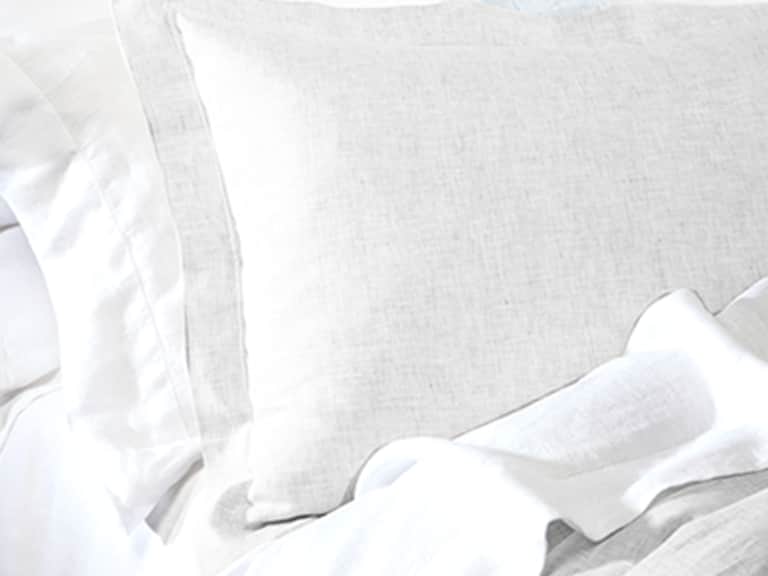
Linen has a distinctive texture: a little irregular, naturally tactile and often more relaxed than the smooth, even surface of cotton sateen. It is valued for airflow and its ability to manage moisture, qualities that many sleepers appreciate in a duvet cover. Its character is not perfectly uniform. Small variations in yarn and surface are part of linen’s visual language, not necessarily signs of a flaw.
Consider how you want the bed to feel. Some linen is stone-washed or pre-washed to give it a softer hand from the first use. Other fabrics may begin with a crisper or more structured feel and relax gradually. Finishing can alter the surface, drape and initial softness, so look for descriptions that explain what has been done rather than relying on phrases such as “buttery” or “cloud-like.”
Linen generally softens with use and laundering, but that process takes time. If you want a supple feel immediately, a pre-washed cover may be more satisfying. If you enjoy a fabric that changes gradually, an unembellished finish may appeal. Neither approach is automatically better: the right one depends on how you like textiles to feel against your skin and how much texture you want in the room.
Think, too, about appearance. Linen’s natural creases create a bed that feels composed without looking overly formal. A cover that has been pressed can look crisp for a moment, but ordinary use will bring the characteristic folds back. If your ideal bedroom is immaculate and sharply tailored, the relaxed finish may require a shift in expectations. If you favour an inviting, lived-in atmosphere, the texture is part of the pleasure.
Read fabric weight in context
Some product descriptions give linen weight in grams per square metre (gsm). This figure can help you compare fabrics, but it is not a quality score and should not be considered in isolation. A heavier cloth may feel more substantial and drape with greater presence; a lighter one may feel airier. The result also depends on yarn, weave, finishing and the dimensions of the cover.
There is no single ideal weight for every bedroom. A warm sleeper, a well-heated home or a duvet insert designed for summer may call for a lighter-feeling cover. Someone who prefers a more substantial layer might gravitate toward a denser fabric. Climate, bedding layers and personal preference matter as much as a number on a specification sheet.
When comparing two listings, pair the stated weight with the product’s description and care guidance. If the weight is not supplied, do not assume that the fabric is poor; instead, look for a clear account of composition, finishing, origin and construction. A retailer that answers questions about the hand and drape is providing a more meaningful basis for comparison than a headline number alone.
Make sure the duvet cover fits the insert
Beautiful fabric cannot compensate for a cover that twists around an insert or hangs awkwardly from the bed. Before choosing a size, measure your duvet insert—not merely the mattress—and compare those measurements with the cover’s stated dimensions. A size label such as Queen or King is a helpful shorthand, but sizing can vary between manufacturers and markets.
For a more reliable fit, compare both width and length. If the cover is noticeably larger than the insert, the duvet may shift inside it, leaving empty corners or an uneven surface. If it is too small, the insert can bunch or feel compressed. A close match usually helps the bed look neat and makes the cover easier to arrange.
Pay particular attention if your insert is oversized, unusually thick or made for a specific bed configuration. A thick insert can occupy more of the cover’s interior, and a generous mattress width may make the finished bed look different from the product photograph. When exact dimensions are unavailable, ask the retailer before ordering rather than relying on a label alone.
Internal ties or fasteners can help secure the insert. Check whether they are present and whether their number and placement correspond with loops on your duvet. Ties do not replace correct sizing, but they can reduce shifting during the night. Also note the closure style—buttons, snaps or a zipper—and whether it is positioned and finished in a way that suits your preference.
Let the care label guide the routine
Linen is durable, but good care matters. Follow the instructions supplied with the particular cover, since washing and drying guidance may vary with dye, finishing, construction and trim. In general, many linen covers benefit from a gentle wash, an appropriate amount of mild detergent and enough space to move freely in the machine. Overloading can create friction and prevent thorough rinsing.
Separate colours where needed, especially during the first washes, and avoid chlorine bleach unless the care label explicitly permits it. Fabric softener is often unnecessary; residues can build up and may affect the way absorbent natural fibers feel. If the cover is stained, treating the area promptly according to the label is usually preferable to using harsh products indiscriminately.
Low-heat drying can help limit stress on the fibers and reduce the chance of overdrying. Remove the cover while it is still slightly damp if the instructions allow, then smooth it out and finish drying it flat or on a line. This can preserve a supple hand and make creases easier to manage. High heat and prolonged tumble drying may contribute to wear or shrinkage, so resist the temptation to treat every textile as if it were ordinary cotton.
Some linen is designed to look beautifully rumpled; ironing is optional. If you prefer a smoother finish, check the care directions and use an appropriate iron setting, ideally while the fabric is a little damp. Avoid aggressive pressing if the cover has decorative stitching or a special finish. Store it clean and completely dry, in a breathable place, away from prolonged direct sunlight.
Assess construction and finishing details
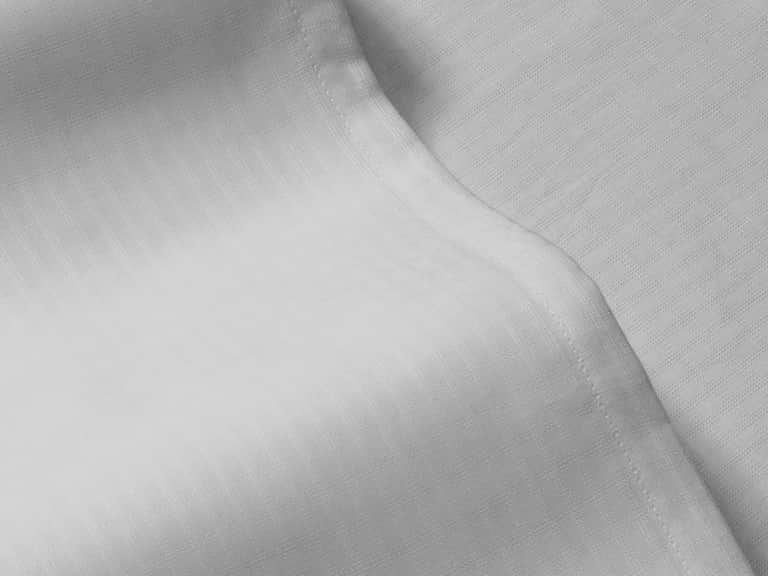
Turn your attention to the details that will matter once the duvet cover is in regular use. Inspect the stitching around seams, the quality of the closure and the finish at the corners. Strong, even seams are a practical sign of careful construction. A decorative hem or pick stitching can bring a subtle, tailored note, but the finish should sit comfortably with the relaxed texture of the linen.
Ask how the cover is secured at the bottom and whether the closure will be convenient to use. A button closure may offer a classic appearance; a zipper can create a clean edge. The right choice is personal, but it should feel secure and be straightforward to open when the cover needs laundering. If the listing does not specify the closure, do not assume.
Check what is included. A duvet cover is not always sold with pillow shams, pillowcases or a duvet insert. Product photography may show a fully styled bed, while the actual listing includes only the cover. Read the item description and package contents carefully, especially if you are planning a coordinated set.
Use colour and texture with intention
Organic linen’s texture gives colour a particular softness. Natural white, ivory, sand and muted earth tones let the weave remain the focus, while deeper shades can make the bed feel more enveloping. Dyed linen may show subtle variation across the surface; this can lend depth, though the appearance will depend on the dyeing and finishing process.
For a calm room, choose a colour that relates to the larger palette rather than matching every element exactly. A warm neutral cover can sit comfortably beside pale timber, stone and cream; a cooler grey or blue can sharpen a room with warm finishes. Texture offers another route to contrast: pair a relaxed linen cover with a smoother sheet or a neatly finished quilt without making the bed feel overworked.
Consider how the duvet cover will look after ordinary use. Linen creases, softens and develops a more personal drape over time. That evolving surface is central to its appeal, but it is worth choosing a colour and finish that you will still like when the bed is not freshly made. Luxury here is less about perfection than about material that feels right in daily life.
A practical checklist before you buy
Before making a decision, take a moment to compare the essentials. A well-chosen organic linen duvet cover should make sense on paper as well as feel compelling in your imagination.
- Fiber: Confirm whether the cover is 100% linen or a blend, and check that the material description is specific.
- Certification: Look for a named standard such as GOTS and verify what the claim applies to.
- Provenance: Note where the flax was grown and where the linen was woven or made.
- Feel: Compare the stated weight, weave description and finishing, including whether the fabric is pre-washed.
- Fit: Match the cover’s actual dimensions to your duvet insert and check for internal ties or other fasteners.
- Care: Make sure the laundering instructions suit the time and equipment you have available.
- Contents and construction: Confirm what is included and review the closure, seams and finishing details.
When a listing leaves a key question unanswered, a direct question to the retailer is worthwhile. Ask for the finished dimensions, fabric weight, certification details or care instructions. Clear answers are part of a confident purchase; they help you compare like with like and avoid choosing on mood alone.
Questions to ask about organic linen bedding
Is every linen duvet cover breathable?
Linen is widely appreciated for its airflow and moisture-management qualities, but the sensation of a particular cover depends on its weight, weave, finish and the rest of your bedding. A heavier fabric may feel more substantial, while a lighter one may seem airier. Your duvet insert and bedroom temperature also influence comfort.
Does a higher weight mean better quality?
No. Fabric weight describes one characteristic, not the overall quality of a duvet cover. Fiber quality, yarn, weave, finishing, sewing and care all contribute to performance. Use weight as one point of comparison, not as a shortcut for judging value or longevity.
Will linen soften after washing?
Linen commonly becomes softer with use and laundering, though the pace and degree vary by fiber, construction and finish. A pre-washed cover may feel gentler at the outset. Following the care label helps support the fabric’s texture and service life.
Can an organic claim be trusted without certification?
A claim is easier to assess when it names a recognized certification and explains its scope. Without that information, the word “organic” may not tell you enough to compare products confidently. Seek supporting details from the maker or retailer before treating a general claim as equivalent to a certified one.
Should a duvet cover be the same size as the insert?
Compare the actual measurements of both items. A close match usually helps the insert sit evenly, but the ideal fit can depend on the cover’s construction and the insert’s loft. Do not rely solely on shared size labels, since dimensions can differ from one maker to another.
The enduring appeal of a well-chosen cover
The most satisfying organic linen duvet cover is not necessarily the heaviest, the softest in a product description or the one with the longest list of claims. It is the one whose provenance is explained, whose dimensions suit your insert, whose texture feels inviting and whose care requirements fit your routine. Those practical details give the fabric room to become part of the daily landscape of your bedroom.
Look beyond the word “organic” to the certification, fiber origin and construction. Consider weight and finishing as clues to feel, not as absolute measures of quality. Measure before buying, check the closures and follow the care label. Then allow the linen to do what it does best: soften with time, settle into a natural drape and bring an easy, tactile elegance to the bed.